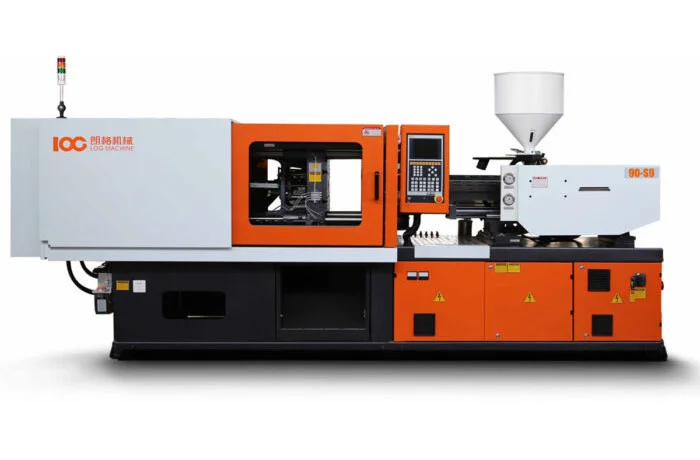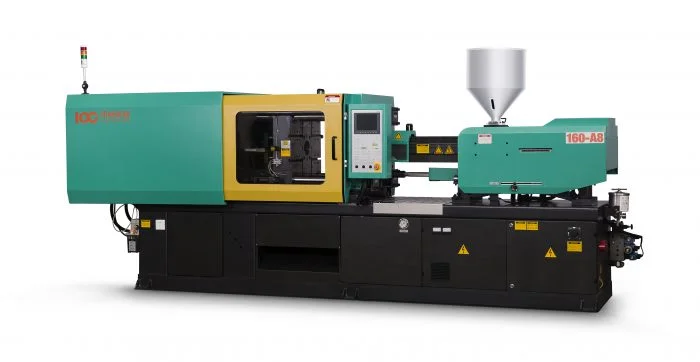
An injection molding machine is the main molding equipment for making thermoplastic or thermosetting plastics into plastic products of various shapes by using plastic molding molds.
How an injection molding machine works
The working principle of the injection molding machine: utilizing the thrust of the screw (or plunger), the plasticized molten state (i.e., the viscous flow state) of the plastic is injected into the closed cavity, and the process of obtaining the product after curing and setting is obtained.
What is a hydraulic injection molding machine?
The hydraulic injection molding machine is an injection molding machine that controls the flow direction or flow of high-pressure hydraulic oil pumped from a hydraulic pump through a hydraulic valve to drive a hydraulic cylinder piston rod or a hydraulic motor to complete linear reciprocating or rotating motion.
What are their characteristics?
- Use a variety of clamping mechanism forms
- Injection forming range is large
- Price is lower
- Technology is mature and easy to maintain
Suitable for where to use, or what use
Suitable for a wide range of molding products, to meet the processing requirements of more products.
What is an electric injection molding machine?
The all-electric injection molding machine refers to the various mechanisms of the injection device (ejection, metering, and table movement) and the various mechanisms of the mold clamping device (type opening, clamping, and product ejection) all rely on the servo motor. Drive.
What are their characteristics?
- Injection performance is stable. The dynamic technical parameters of the all-electric injection molding machine are basically free from external factors, and the mold forming parameters of the computer storage always conform to the actual molding conditions, so the injection performance is stable. The accurate response to injection molding parameters.
- Energy-saving. Energy saving is the biggest advantage of electric injection molding machines. Since the servo motor is directly driven according to the required force of each actuator, not only the efficiency is improved, but also the energy utilization rate is improved, and the energy utilization rate can reach 95% or more so that the energy consumption of the full hydraulic injection molding machine is 25% to 60%
- Water. Since the all-electric injection molding machine does not use hydraulic oil, only the cooling water is required at the feeding port, so the cooling water usage can be reduced by 70% compared with the hydraulic injection molding machine that loads the sensitive pump, and the ordinary quantitative pump hydraulic injection molding machine Compared to cooling water can be reduced by 90%
- High efficiency. Since each actuator of the electric injection molding machine is driven by an independent servo motor and is not affected by the system, it can perform a compound action, can be simultaneously ejected during the mold opening process, and can be simultaneously clamped during the plasticizing process. , which greatly increases productivity.
- optimize the working environment. Since the hydraulic fluid is not used, the working environment can be kept clean and the noise of the machine can be more than 10 dB lower than that of the full hydraulic injection molding machine. While optimizing the working environment, the injection molding machine’s floor space was saved by 15% due to the cancellation of the hydraulic system.
Frequently Asked Questions:
What industries benefit most from injection molding machines?
Industries like automotive, medical, electronics, and packaging rely heavily on injection molding for high-volume production.
How long does an injection molding cycle take?
A typical cycle can range from a few seconds to a couple of minutes, depending on part complexity and material.
What is clamping force in an injection molding machine?
Clamping force is the pressure applied to keep the mold closed during injection, ensuring accurate and defect-free parts.
How do you choose the right injection molding machine?
It depends on factors like material type, production volume, part size, and required precision.
What is the difference between hydraulic and electric injection molding machines?
Hydraulic machines offer high power, while electric machines provide better precision, speed, and energy efficiency.
What are common defects in injection molding?
Common defects include warping, sink marks, short shots, and flash, often caused by improper settings or mold issues.
How can injection molding efficiency be improved?
Efficiency can be improved by optimizing cycle time, maintaining machines, and using high-quality molds and materials.
Is injection molding suitable for small-scale production?
It is typically best for large-scale production, but small batches are possible with the right setup and tooling.
What maintenance does an injection molding machine require?
Regular cleaning, lubrication, and inspection of components help ensure consistent performance and longer lifespan.
What is the cost of an injection molding machine?
Costs vary widely depending on size, type, and features, ranging from tens of thousands to several hundred thousand dollars.