In the last post we split the shot into two phases and said fill pressure gets the melt to the end of the cavity, while holding pressure keeps the part full as it shrinks. This post is about that second phase, because it is the one that quietly decides whether your parts are dimensionally consistent, and because it comes with a single measurement that tells you almost everything: part weight.
If you take one thing from this article, make it that. When a molder wants to know whether the process is stable, they weigh the part. Holding pressure is the setting that moves that number, and a part weight that drifts through a shift is usually a holding problem before it is anything else.
What holding pressure actually does
Plastic shrinks as it cools. That is not a defect, it is physics, and it happens in every part you will ever mold. The moment the cavity is full, the material inside it begins to lose volume as it drops in temperature. If nothing compensates for that loss, the part finishes light, dimensionally undersized, and prone to sink marks and internal voids where the shrinkage concentrated.
Holding pressure is what compensates. After the fill phase ends, the machine holds a lower pressure on the melt and continues to feed a small amount of additional material into the cavity through the gate, replacing the volume that shrinkage is taking away. It keeps doing this until the gate freezes, at which point no more material can enter and the part weight is locked in.
That gate-freeze moment is why holding time matters alongside holding pressure. Hold for less time than the gate takes to freeze and you stop packing early, giving up weight and consistency. Hold longer than the gate-freeze and you are simply burning cycle time, because once the gate is frozen no additional pressure reaches the cavity.
Why part weight is the number to watch
Every other holding-related defect is really a symptom of the same underlying thing: how much material got packed into the cavity before the gate froze. Part weight measures that directly, which is why it is the most useful single diagnostic on the bench.
| What you see | Usually means | Where to look |
|---|---|---|
| Sink marks, voids, low weight | Under-packing: not enough material replaced the shrinkage | Holding pressure too low, or holding time ended before gate freeze |
| Flash, high weight, ejection stress | Over-packing: more material forced in than the cavity should hold | Holding pressure too high |
| Weight drifting through the shift | Inconsistent packing shot to shot | Pressure control stability, gate-freeze timing, melt consistency |
| Warpage or internal stress | Uneven packing across the part | Holding profile, gate location, cooling balance |
The pattern worth internalising: light parts and sink point to under-packing, heavy parts and flash point to over-packing, and a weight that will not hold still points to a consistency problem rather than a wrong setpoint. The fix is different in each case, and weighing the part tells you which one you are in.
Holding pressure is not fill pressure, and the defects prove it
This is the confusion we flagged in the injection pressure post, seen from the holding side. A part that fills fine but sinks does not need more injection pressure, it needs more pack. Turning up the fill pressure on a sink usually just adds flash, because you are forcing the fill phase harder to solve a problem that lives in the phase after it.
The rule of thumb: if the part fills but finishes wrong, weigh it and look at holding. If the part does not fill at all, that is the injection phase, not this one. Matching the defect to the phase is most of what saves you from chasing settings in circles.
Where the machine helps: stability, not just pressure
Holding pressure is a lower pressure than fill, so raw capability is rarely the constraint. What matters in the holding phase is consistency. If the pressure the machine actually delivers wanders slightly from shot to shot, your part weight wanders with it, and no setpoint on the screen will hold a number the hardware cannot hold steady.
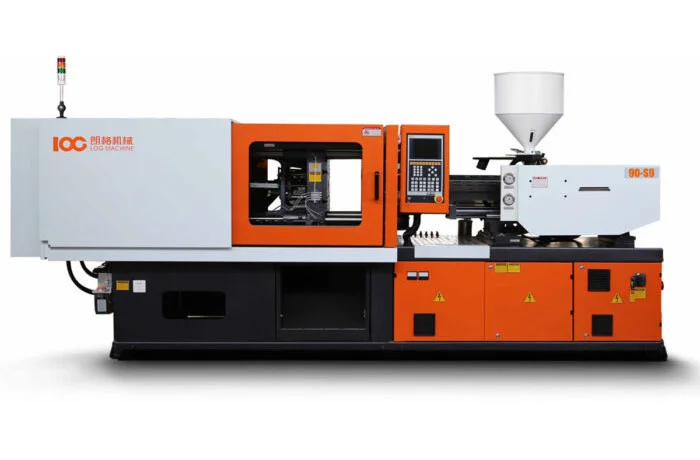
This is where the S8’s control and injection design earn their place, and it is a fair claim to make because it is exactly what LOG publishes. The injection cylinder uses low-friction seals specifically to improve response rate and stability through the complex, changing pressure profiles of a real cycle, and holding is part of that profile. On the control side, the KEBA i2880 platform monitors actual pressure and flow in real time over a high-speed bus, and the servo-hydraulic system uses pump confluence with servo synchronization to deliver pressure precisely rather than approximately. Applied to the holding phase, that combination is what keeps the packing pressure the part sees close to the pressure you set, cycle after cycle, which is what keeps part weight stable.
The honest framing: the machine does not choose your holding pressure or find your gate-freeze time for you. Those come from your part, your resin, and process development. What a stable, well-controlled machine does is hold the setpoint faithfully once you have found it, so that a process you dialled in at the start of a shift is the same process at the end of it.
The question to ask before you buy
Not “how much pressure can it hold,” but: how consistently does it hold pressure shot after shot? A machine that peaks impressively but drifts under a steady holding load will give you part weight that drifts too, and part weight drift is scrap on any tolerance-sensitive job.
If your parts are dimensionally critical, thin sections next to thick ones, tight tolerances, or a resin that shrinks a lot, that is worth raising when the machine is specified. Send us the part and resin through the application worksheet, and our application engineers can talk through both the fill and holding side, because as the last two posts have shown, they are one continuous event, not two separate ones. Specifications for each size are on the individual model pages, from the S8 130 ton through the S8 250 ton.
See the machines running
Our YouTube channel carries machine demonstrations across the S8 and S9 ranges, which is a reasonable way to see how these machines behave before you get into specifications.
After the sale
Spare parts for LOG machines are available through Virtus Equipment Direct, our online store. Our field service engineers are certification-trained, and we offer operator training and processing assistance, including mold tests and help with difficult engineering resins, because a correctly specified machine still has to be run correctly.
Frequently asked questions
What is the difference between holding pressure and injection pressure?
Injection pressure fills the cavity during the filling phase. Holding pressure takes over once the cavity is full and packs the part, feeding a little extra material through the gate to compensate for shrinkage as the plastic cools. It is a lower pressure applied for a set time, and it continues until the gate freezes. Fill gets the material there; hold keeps the part full while it shrinks.
Why is my part light or sinking?
A light part with sink marks is the classic under-packing signature: not enough material replaced the shrinkage before the gate froze. Look at holding pressure and holding time. Either the pressure was too low, or the hold ended before the gate froze off. Weighing the part confirms it, since under-packed parts finish below their target weight.
Why does my part weight drift through a shift?
Weight that will not hold still is usually a consistency problem rather than a wrong setpoint. It points to how steadily the machine holds packing pressure shot to shot, to gate-freeze timing, and to melt consistency. Stable pressure control and a consistent melt are what keep the packed weight, and therefore the part, repeatable.
How does a LOG machine keep part weight consistent?
Holding is about stability more than peak pressure. The LOG S8 uses low-friction injection cylinder seals for stable response through the complex pressure profile of a cycle, and the KEBA i2880 control monitors actual pressure and flow in real time, with a servo-hydraulic system that delivers pressure precisely. The machine does not choose your holding pressure, but it holds the setpoint you develop faithfully, cycle after cycle.
Terms worth knowing
Holding pressure. The pressure applied after the cavity is filled, packing additional material into the part to compensate for cooling shrinkage. Also called pack or hold pressure. It governs part weight, sink, voids, and dimensional consistency.
Holding time. How long holding pressure is applied. It should run until the gate freezes; ending sooner gives up part weight, running longer just adds cycle time.
Gate freeze. The point at which the material in the gate solidifies and no more can enter the cavity. Part weight is locked in at gate freeze, which is why holding time is set relative to it.
Part weight. The mass of the molded part, and the most direct single measure of how well the part is packed. Drifting weight signals a packing or consistency problem before almost anything else.
Sink mark. A surface depression over a thicker section, caused by shrinkage that holding pressure did not compensate for. It is a holding-phase defect, not a filling-phase one.