Why Energy Consumption Matters More Than It Used To
Electricity costs have risen significantly for industrial manufacturers over the past several years. Research published in the Journal of Cleaner Production found that electrical energy accounts for 30% to 45% of the total operational costs of an injection molding cell in serial production. At those levels, the drive technology of the machine is not a peripheral spec. It is a direct operating cost variable that compounds across every shift, every year, for the life of the machine.
For facilities running injection molding machines on two or three shifts, the difference between a standard hydraulic press and a servo-hydraulic press running the same production volume adds up to real money. Understanding where the savings come from is the foundation for evaluating whether a servo machine is the right investment for a specific application.
Why Standard Hydraulic Machines Use More Energy Than They Need To
A standard hydraulic injection molding machine uses a constant-speed electric motor to drive a hydraulic pump. That motor runs at full speed continuously throughout the machine cycle, regardless of whether the machine is actively injecting, holding, cooling, or sitting idle between cycles. During the cooling phase alone, which can account for 50% or more of total cycle time on many parts, the pump continues running at full capacity against a pressure-relief valve, converting energy directly into heat with no productive output.
This constant-operation design is simple and reliable, but it is inherently wasteful. Energy is consumed proportional to pump displacement and speed, not proportional to the machine’s actual hydraulic demand at any given moment in the cycle.
How a Servo Drive Changes the Energy Profile
A servo-hydraulic injection molding machine replaces the constant-speed induction motor with a variable-speed servo motor. The servo motor adjusts its speed and torque output in real time to match the actual hydraulic demand of each phase of the injection cycle. During cooling, when hydraulic demand is minimal, the servo motor slows significantly or stops. During injection, when high flow is needed, it accelerates to deliver it.
This demand-responsive operation is the source of the energy savings. The machine draws power when it needs it and not when it does not. According to ENGEL, a manufacturer with published data on this comparison, servo-hydraulic machines consume less than 60% of the energy of a standard hydraulic machine with variable pump. Research published in peer-reviewed journals confirms similar magnitudes of reduction.
Energy Consumption by Drive Technology: Research Data

Energy consumption data: Research published in Materials (MDPI) and the Journal of Cleaner Production, as cited in Tede Solutions TCO and Energy Efficiency of Injection Molding Machines (2025). Values represent average energy consumption per kilogram of plastic produced under typical production conditions. ENGEL manufacturer data confirms servo-hydraulic consumption below 60% of standard hydraulic. Actual savings vary by machine utilization rate, cycle time, material, and operating conditions.
Where in the Cycle the Savings Occur
The energy reduction from servo drive is not uniform across the injection cycle. It is most pronounced during the phases where a standard hydraulic machine runs its pump at full speed against minimal demand. These are the phases where servo technology delivers its largest benefit:
Cooling phase. This is typically the longest single phase in an injection molding cycle, often 30% to 60% of total cycle time. A standard hydraulic pump runs continuously through this phase. A servo motor slows to near-zero, consuming only a fraction of the energy.
Mold opening and closing. These motions require moderate hydraulic flow and are completed quickly. The servo motor ramps up to deliver the flow needed and then reduces speed after each movement is complete.
Hold and pack phase. Moderate, sustained hydraulic pressure is needed. The servo motor holds the required pressure precisely without excess flow, reducing heat generation in the hydraulic oil.
Machine idle time. In any production environment where machines are not running at 100% utilization, a standard hydraulic press continues drawing significant power while waiting for the next cycle or a production changeover. A servo machine draws minimal power during idle periods.
Servo vs. Standard Hydraulic: Key Differences
Standard Hydraulic Press
- Constant-speed motor runs all the time
- Energy consumed during cooling and idle
- Higher hydraulic oil temperature
- More frequent oil changes required
- Higher energy cost per cycle
- Simpler drive system, lower initial cost
- Widely available service technicians
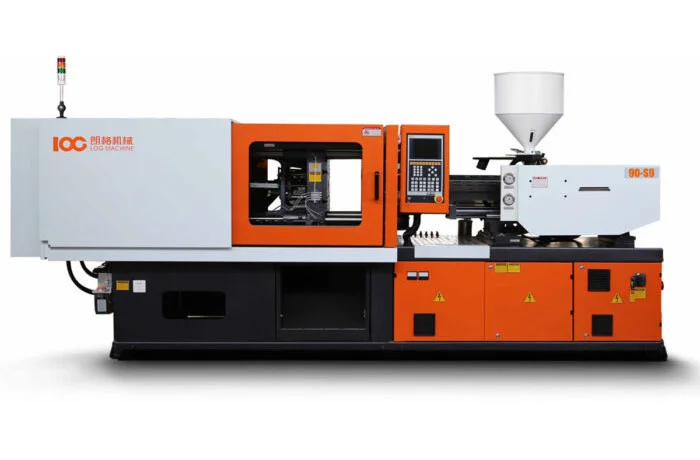
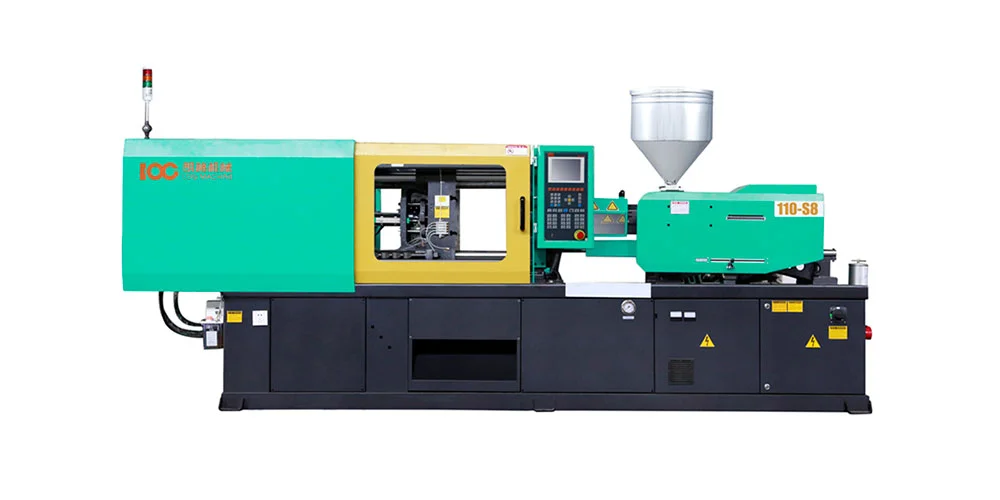
Servo-Hydraulic Press (LOG IMM S8/S9)
- Variable-speed motor matches cycle demand
- Minimal energy draw during cooling and idle
- Lower hydraulic oil temperature
- Extended oil change intervals
- 40% or more energy reduction per cycle
- Higher initial investment
- Faster, more precise response than standard hydraulic
Secondary Benefits Beyond Energy Cost
The energy savings are the headline benefit, but servo-hydraulic machines produce several secondary operational improvements that also affect total cost of ownership.
Lower hydraulic oil temperatures extend the life of hydraulic seals and reduce the frequency of oil changes. Standard hydraulic systems running at continuous full speed generate significant heat; a servo system running at demand generates less heat because less energy is being converted and dissipated. This translates to reduced maintenance costs and longer component life over time.
Servo motors also deliver faster, more precise response than a constant-speed induction motor with a hydraulic control valve. Injection speed, hold pressure, and clamping motion can be controlled with higher repeatability, which improves shot-to-shot consistency and reduces scrap rates.
When Servo Is the Right Choice
For the majority of injection molding applications running standard thermoplastics in moderate to high volume, servo-hydraulic is the practical choice. The energy savings are real, the payback period on the higher initial cost is measurable, and the improved process consistency adds value beyond the energy bill.
The LOG IMM S8 and S9 Series are servo-hydraulic injection molding machines available from 90 tons to 650 tons. Both series are designed specifically around the energy-saving servo drive system, with components sourced from well-known global suppliers including Eckerle (Germany), Vickers (USA), KEBA (Austria), and Yuken (Japan).
Ready to calculate what a servo injection molding machine would save your operation? Talk to the LOG IMM team today.