Robots, connected machines, and data are moving from “nice to have” to the foundation of a competitive molding operation. Here is what is driving the shift, what the numbers say, and how to start without rebuilding your plant.
Automation in injection molding is no longer an optional upgrade reserved for the largest producers. It is becoming the baseline for staying competitive, driven by labor shortages, the demand for higher and more consistent output, and the broader move toward Industry 4.0 and smart manufacturing. The question for most molders in 2026 is not whether to automate, but where to start.
The numbers behind the shift
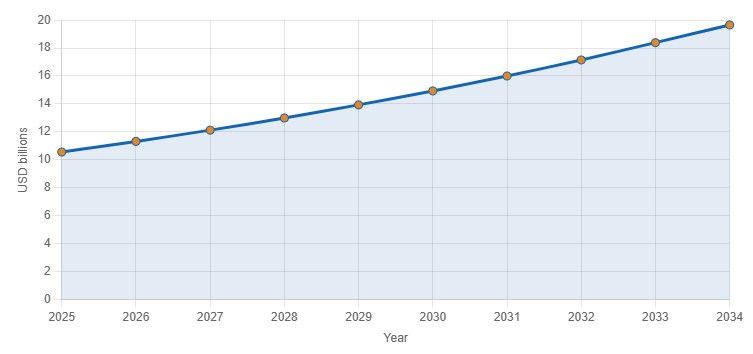
The market data makes the direction unmistakable. The global market for robotics and automation in injection molding machines was valued at about $10.55 billion in 2025 and is projected to reach roughly $19.66 billion by 2034, a compound annual growth rate of about 7.2% from 2026 to 2034.
Injection molding robotics & automation market growth
Market value in USD billions. 2025 and 2034 figures reported; intermediate years interpolated at the reported 7.2% CAGR for illustration.
Within that growth, hardware still holds the largest share, but software, particularly AI-based process optimization and IoT monitoring platforms, is the fastest-growing segment. In other words, the value is shifting from the robot arm itself toward the intelligence that coordinates it.
What is actually driving adoption
Three forces show up again and again across the industry analysis:
- Labor shortages and rising wages. Persistent workforce gaps in key manufacturing regions are pushing companies toward robotic automation to ensure operational continuity and cost competitiveness.
- Quality and consistency. Robotic systems with advanced motion control help maintain uniform quality while reducing defects and material waste across high-volume runs. Advanced automated systems have been reported to improve production efficiency by nearly 22% and cut material waste by roughly 18%.
- Industry 4.0 connectivity. IoT connectivity and edge computing let machines and robots communicate with factory-wide MES and ERP systems, enabling predictive maintenance, remote monitoring, and data-driven optimization of the whole line.
The building blocks, from simple to advanced
Automation is not all-or-nothing. It is a ladder, and most successful plants climb it one rung at a time.
| Stage | What it looks like | What it delivers |
|---|---|---|
| 1. Part handling | Automated part removal, stacking, and insert loading with a robot or sprue picker. | Frees operators from repetitive tasks; steadier cycle-to-cycle timing. |
| 2. Quality automation | AI-powered vision inspection systems checking parts inline. | Catches defects automatically; less scrap reaches the customer. |
| 3. Connected monitoring | IoT dashboards tracking OEE, cycle consistency, and maintenance alerts. | Data-driven decisions; early warning before failures. |
| 4. Predictive maintenance | Cloud-based analytics predicting wear and scheduling service. | Fewer unplanned stoppages; maintenance on your terms. |
| 5. Lights-out cells | Autonomous production with minimal human intervention. | Maximum utilization; run through unattended shifts. |
A practical roadmap to get started
You do not need a greenfield smart factory to benefit. Industry guidance for molders converges on a start-small, scale-deliberately approach:
- Identify the repetitive, labor-heavy tasks first, such as part removal, degating, and inspection.
- Map your machine utilization, downtime sources, and operator-to-machine ratios so you know where the real losses are.
- Automate one cell or process before scaling. Common entry points are automated part removal and stacking, robotic insert loading, and vision inspection.
- Choose suppliers with open communication protocols such as OPC UA or Euromap 77, and favor retrofit-compatible robots so you are not locked in.
- Invest in people. Train for robot programming, PLCs, and HMI systems, and cross-train operators on data collection and basic maintenance. Automation depends as much on skills as on hardware.
Where LOG fits
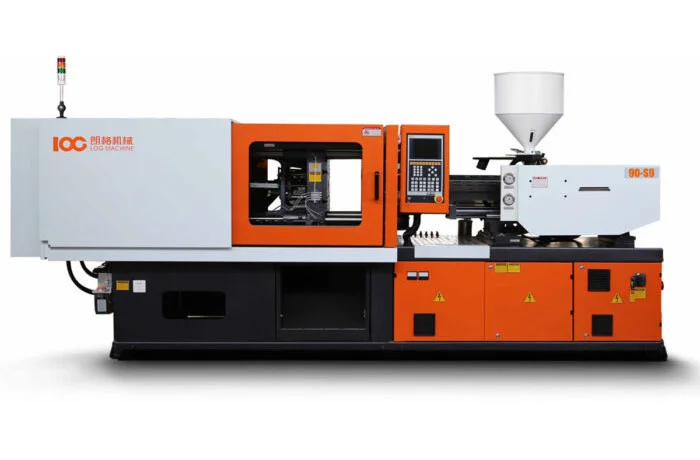
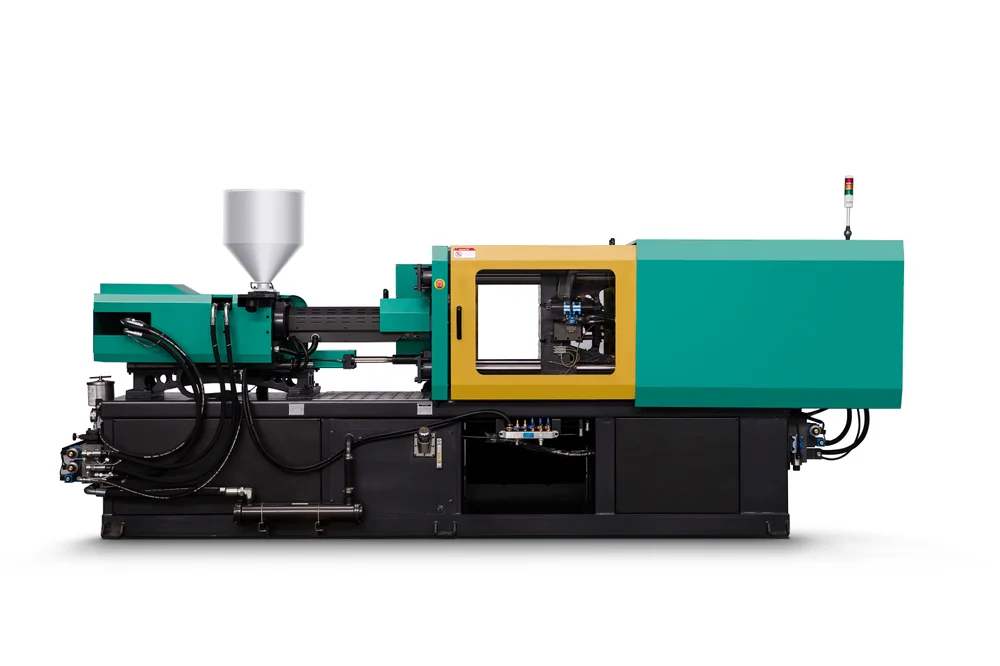
Every automation strategy rests on one thing: a machine that repeats the same shot the same way, thousands of times. LOG’s S8 and S9 Series servo machines are built for exactly that precision and repeatability, which is what makes robots, vision systems, and IoT monitoring worth adding on top. If you are planning an automated cell, the press at its center is the foundation everything else depends on.
Key terms
- Industry 4.0
- The use of connected machines, sensors, and data (IoT, analytics, MES/ERP integration) to make manufacturing smarter, more automated, and more responsive.
- IoT (Internet of Things)
- Networked sensors and devices that let machines share operating data in real time for monitoring, analysis, and remote control.
- OEE (Overall Equipment Effectiveness)
- A standard metric combining availability, performance, and quality to measure how effectively a machine is used.
- Predictive maintenance
- Using machine data and analytics to forecast wear and schedule service before a failure occurs, rather than on a fixed calendar.
- Lights-out manufacturing
- Fully autonomous production that runs with minimal or no human presence, so the facility can operate unattended.
- OPC UA / Euromap 77
- Open communication standards that let injection molding machines and robots from different vendors exchange data reliably.
Frequently asked questions
Is automation worth it for a small injection molding shop?
It can be, if you start where the payback is clearest. You do not need a full smart factory: begin by automating one repetitive, labor-heavy task such as part removal or inspection, measure the result, and scale deliberately. The main challenges the industry cites are high upfront cost and the skilled labor needed to run advanced systems, so a staged approach manages both.
What is the first step to automating an injection molding operation?
Identify the repetitive, labor-heavy tasks first (part removal, degating, inspection), then map machine utilization, downtime, and operator-to-machine ratios so you know where the real losses are. Common entry points are automated part removal and stacking, robotic insert loading, and vision inspection. Automate one cell before scaling.
How fast is injection molding automation growing?
The global market for robotics and automation in injection molding machines was valued at about $10.55 billion in 2025 and is projected to reach roughly $19.66 billion by 2034, a compound annual growth rate of about 7.2% from 2026 to 2034. Software, particularly AI process optimization and IoT monitoring, is the fastest-growing segment.
What role do servo and electric machines play in automation?
They are the foundation. All-electric and servo machines offer higher precision, faster response, and better energy efficiency than fixed hydraulic systems, giving robots and monitoring systems a consistent, repeatable process to build on. A stable machine is the prerequisite for meaningful automation.
What is predictive maintenance in injection molding?
It uses IoT sensor data and cloud analytics to forecast wear and schedule service before a failure happens, instead of waiting for a breakdown or following a fixed calendar. It reduces unplanned stoppages and lets you plan maintenance on your own terms, and it is one of the higher rungs on the automation ladder.
Build on a machine you can automate
Explore LOG’s servo injection molding machines and parts, or watch them run precision production parts shot after shot.